Deutsche Welle, 24 July 2013

In Africa, albinos face discrimination. It can lead to verbal abuse or even ritual killings. In Liberia, albinos are discovering that there is strength in numbers and have formed their own advocacy group.

In Africa, albinos face discrimination. It can lead to verbal abuse or even ritual killings. In Liberia, albinos are discovering that there is strength in numbers and have formed their own advocacy group.
U-Thant
Smith is a 27-year-old Liberian albino and president of the Organizing United
Albinos Association of Liberia, a group set up to fight for the rights and
protection of albinos in the West African nation. He is supported by the
group's general secretary, Nasuma Kamara.
Smith told
Deutsche Welle "albinos face lots of difficulties in this country"
including "segregation and discrimination."
Smith said
that being an albino in a black African nation like Liberia makes you stand out
within society. Being set apart is generally accompanied by prejudice. He said
albinos can barely participate in society and when they try to "people
always say things that are not necessary."
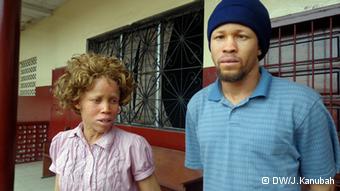 |
| Nasuma Kamara and U-Thant Smith are working to end discrimination against albinos in Liberia |
"It is
not easy. It hurts me a lot. I feel very frustrated. Sometimes, if I'm ready to
express it, tears set in my eyes. Why will we be born in this kind of society
and be discriminated? I don't know why," he said.
Despite
such challenges, Smith, whose parents are also albino, takes pride in his
achievements. He has completed high school in a nation which has a high rate of
illiteracy and now has his sights set on a place at university.
"Love
my complexion and my color"
Numasie
Kamara (not to be confused with Nasuma Kamara) is also a member of the advocacy
group. She is an albino who was born to black parents and told Deutsche Welle
she is the only albino in her family and that makes her feel special, in spite
of the negative reactions from society.
"I
feel very proud because that's how God fixed me," she said. "I love
my complexion and my color."
Kamara is a
primary school teacher, married with "a lovely all black family." She
has three children. "All of them are black. My husband is black. I feel
pleased.
 |
| Liberia is recovering from a civil war that ended in 2003 |
Another
activist, Anderson Miamen, told Deutsche Welle a change in attitude was needed.
"These people are humans like us, black people like us, and we should not
discriminate against them," he said.
Preventing
discrimination through education
Earlier
this year a group of independent experts from the United Nations drew attention
to discrimination against albinos in the East African nation of Tanzania, where
they are the victims of ritual attacks and routinely mistreated.
The UN also
noted on its news website that albinism was "a genetically inherited
condition occurring in both genders regardless of ethnicity." It added
that almost all people with albinism were visually impaired. They may also have
a life span shortened by lung disease or may develop life-threatening skin
cancers.
The UN's
Special Rapporteur on the right to education, Kishore Singh, said educating
children about albinism was important in preventing discrimination.
No comments:
Post a Comment
Note: Only a member of this blog may post a comment.